The best Card Games For Couples do more than fill a quiet evening. They give two people a shared focus, a little friendly tension, and room to talk between turns. A deck of cards on a small café table can feel inviting; a rulebook that takes twenty minutes to explain, less so.
The Entertainment Software Association’s 2024 Essential Facts report found that 190.6 million Americans play video games for at least one hour each week. That report covers video games, not card games, so it cannot tell us which tabletop titles couples prefer. Still, it points to a broader appetite for play and shared entertainment. For couples choosing a card game, practical details matter more: whether it supports exactly two players, how long a round lasts, and whether success depends on strategy, luck, or cooperation.
This guide compares options such as Gin Rummy, Cribbage, Jaipur, and The Fox in the Forest, with attention to learning curves, replay value, and the kind of interaction each creates. Some games invite quiet concentration; others bring teasing and dramatic last-minute wins. Not every match feels romantic. A close score can test anyone’s patience. Consider this a useful starting point, not a promise that one deck will fix a dull date night.
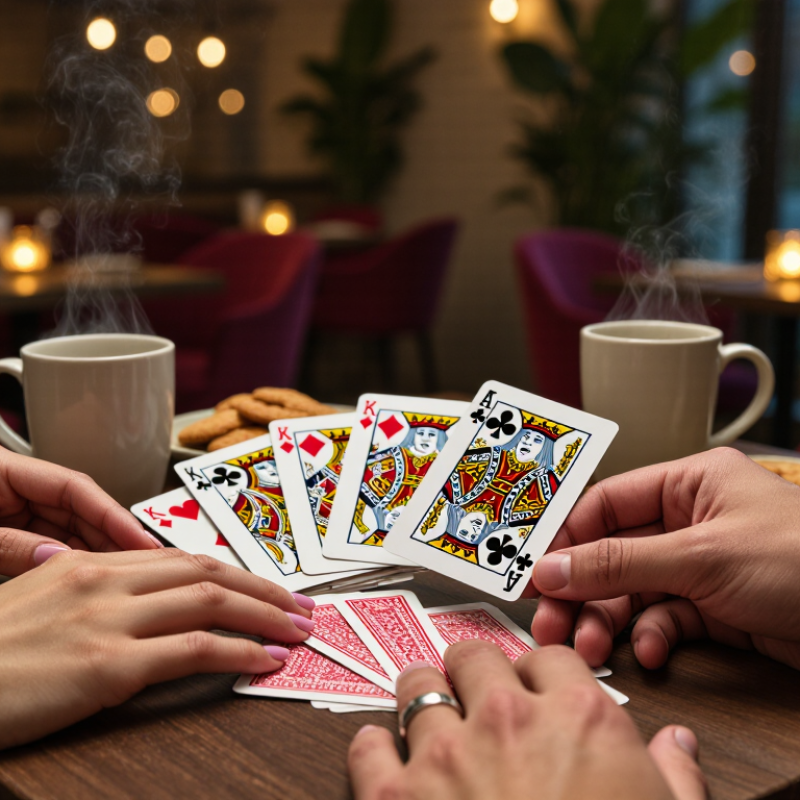
Choosing a card game for two starts with the kind of evening you want. For relaxed conversation, pick a simple game with quick turns and little scorekeeping. If you both enjoy planning, try a two-player trick-taking or strategic card game. Cooperative games can suit couples who prefer solving a shared challenge over competing. Keep it simple if one person is new to card games.
Check the rules before buying or choosing a game. A short rulebook and a round under thirty minutes make it easier to learn without turning the evening into homework. Look for clear two-player instructions; some games feel flat when adapted from larger groups. Notice how much luck the game uses, too. A little chance keeps things lively, while repeated wins based on one player’s experience can become frustrating. A clever game can still feel fiddly at the table.
Tips: Try a sample round before committing to a long session. Keep a standard deck nearby for an easy alternative. Agree on whether playful teasing is welcome, and pause if the rules are causing more debate than fun. A small table and good lighting help, especially when cards have tiny symbols.
Classic two-player card games make a good evening feel easy to start. Gin rummy needs only a standard deck and a little attention. Draw one card, discard one, and build sets or runs before your partner does. The rhythm is simple, but watching which cards your partner throws away adds a small puzzle. A pencil and paper can help beginners track points without interrupting the game.
Cribbage offers more structure. Each player keeps four cards, while two go into the dealer’s crib; scoring includes combinations such as pairs, runs, and cards totaling fifteen. A board makes points visible, though counting can feel fiddly at first. Keep it simple. Two-player whist is another option for couples who enjoy trick-taking. Deal a hand, choose a trump suit when using that variation, and try to win tricks with careful timing. Rules differ between versions, so agree on them before dealing. The table may get quiet while someone studies a discard, and a close game can make small mistakes feel bigger than they are. That changes everything.
Opening hand size per player in common two-player rules
Gin Rummy deals 10 cards to each player; Cribbage deals 6; Crazy Eights and Go Fish typically deal 7; and War divides the deck evenly, giving each player 26. Rules can vary by version.
Strategic card games can turn a quiet evening into friendly competition. Gin rummy rewards players who track discards and decide when to end a round. Cribbage adds another layer: card combinations score points, while a pegboard or pencil keeps the count visible. For a simpler setup, try a two-player trick-taking game with a standard deck. Each choice matters, but luck still gets a say.
The best fit depends on how you both like to compete. If one person enjoys planning several moves ahead, choose a game with hand management and visible discards. If you prefer quick rounds, agree on a short match before dealing. Keep the rules nearby for the first few games. Small scoring details can cause surprisingly serious debates. We once miscounted a hand and had to replay the deal; it was mildly annoying, but useful.
Tips: Set a clear point limit, and take turns choosing the game. Say your interpretation of a rule before play begins. After each round, share one decision you would change, without turning the chat into a lecture. Keep score on paper. The tiny ritual makes wins feel earned—and losses easier to laugh off.
Cooperative card games give couples a shared goal instead of a winner to beat. Some ask players to build a sequence from limited clues; others involve taking tricks while following a common plan. The best fit depends on how you like to communicate. A quick, open-information game suits relaxed evenings, while hidden-card puzzles reward careful questions and patience.
Pay attention to how the rules handle conversation. If players can discuss every card, you can plan openly; if clues are restricted, a raised eyebrow may be all you get.
That changes everything. Try a short game first, then notice whether the decisions feel engaging or frustrating. A small table, two drinks, and a hand of cards are enough to get started.
Agree on a friendly pace, and avoid correcting every move while your partner is still thinking. Even experienced pairs misread a clue or rush a play.
Mistakes happen. Letting one pass can make the next round more enjoyable—and reveal where your teamwork needs a little adjustment.
Choosing a card game for two starts with noticing how you both like to play. Do you enjoy planning several moves ahead, or would you rather laugh at a risky bluff? Cooperative games suit couples who prefer solving a shared problem. Trick-taking and head-to-head games fit players who enjoy reading each other’s choices. For a quiet evening, try simple rules and short rounds. Keep it light.
The Entertainment Software Association’s 2024 Essential Facts report says 190.6 million Americans play video games for at least one hour weekly. That figure concerns video games, not cards, but it shows how common play is as a leisure habit—not which card style couples prefer. Use it as context, not proof. Before choosing, check the rule sheet together, then play a sample round. Notice whether one person is teaching while the other is guessing; that can make even a good game feel uneven. A little competition can be fun, but not every couple enjoys the same level of luck or take-that moves. I’d treat one awkward round as useful feedback, not a verdict. Ask what felt engaging, what dragged, and whether you both want another hand.
| What Are the Top Card Games for Couples? - How to Pick a Game That Fits Your Play Style | |||||
|---|---|---|---|---|---|
| Game or Format | Players | Typical Play Time | Play Style | Best For | What to Consider |
| Gin Rummy | 2 | About 20–45 minutes | Competitive, tactical, and focused on forming sets and runs | Couples who enjoy planning ahead and reading an opponent’s choices | Rounds are easy to learn, but discarding well and tracking useful cards reward practice. |
| Cribbage | 2 | About 20–40 minutes | Competitive, with points scored through card combinations | Players who like a mix of probability, quick decisions, and changing fortunes | A scoring board is convenient but not essential; scores can also be recorded on paper. |
| Two-Player Trick-Taking | 2 | About 20–40 minutes | Strategic, with players competing to win tricks | Couples who enjoy predicting plays and managing a hand of cards | Rules differ between variations, so choose one with clear two-player instructions. |
| Speed | 2 | About 5–15 minutes | Fast, simultaneous, and reaction-based | Couples looking for a short, energetic game with little downtime | Quick turns and rapid card placement make it less suitable for a relaxed, conversation-focused evening. |
| War | 2 | About 10–30 minutes | Simple and mostly luck-based | Casual play, beginners, or a low-pressure game that needs very little teaching | Players have limited control over the outcome, so it may feel repetitive to those seeking strategy. |
| Heads-Up Poker | 2 | About 15–60 minutes | Competitive, with hand evaluation, betting decisions, and bluffing | Couples who enjoy uncertainty, calculated risks, and reading an opponent | Agree on a no-stakes approach or clear limits before playing; the length depends on the format. |
| Cooperative Card Game | Usually 2 or more | About 15–45 minutes | Collaborative, with players working toward a shared objective | Couples who prefer solving problems together rather than competing directly | Rules and difficulty vary by game; check that the chosen version supports two players. |
| Choosing tip: Pick a short, luck-based game for an easygoing session, a trick-taking or melding game for thoughtful competition, or a cooperative game if you would rather share a goal. Play times are approximate and vary by rules, pace, and experience. | |||||
Match the game to your evening. Choose quick turns for relaxed conversation, or deeper planning if you both enjoy strategy. Keep it simple when one player is new.
Check for clear two-player rules and a short rulebook. A round under thirty minutes can help. Try one sample round before settling in.
Gin rummy uses a standard deck and simple turns: draw one card, then discard one. Two-player whist is another option if you enjoy winning tricks.
It offers more structure, with points for pairs, runs, and cards totaling fifteen. A board makes scores visible, though the counting may feel fiddly at first.
Pick cooperative play if you enjoy solving a shared challenge. Try head-to-head or trick-taking games if reading each other’s choices sounds fun.
Some chance can keep a game lively. But repeated wins tied to one player’s experience may feel frustrating. Not every couple agrees.
Use a small table with good lighting, especially when cards have tiny symbols. Keep pencil and paper nearby for tracking points.
Ask what felt engaging and what dragged. One uneven round is useful feedback, not a final verdict. I may be overthinking it, but a pause can help.
Choosing the right card game for two players depends on the kind of evening you want to share. Classic two-player games are easy to learn and offer a relaxed way to enjoy familiar rules, while strategic games add thoughtful decisions and a little friendly competition. For a more collaborative experience, cooperative card games let couples work toward a shared goal, discuss their choices, and celebrate progress as a team.
The best Card Games For Couples are those that match both players’ preferred pace and style. Consider whether you enjoy quick rounds or longer sessions, simple rules or deeper strategy, and competing against each other or working together. Trying different types of games can help you find an option that feels fun for both of you, making game night a chance to connect, laugh, and enjoy a shared activity.

Wonder Tree