Why Are Board Games For Adults So Popular?

Time:2026-10-26 Author:Aria
0%

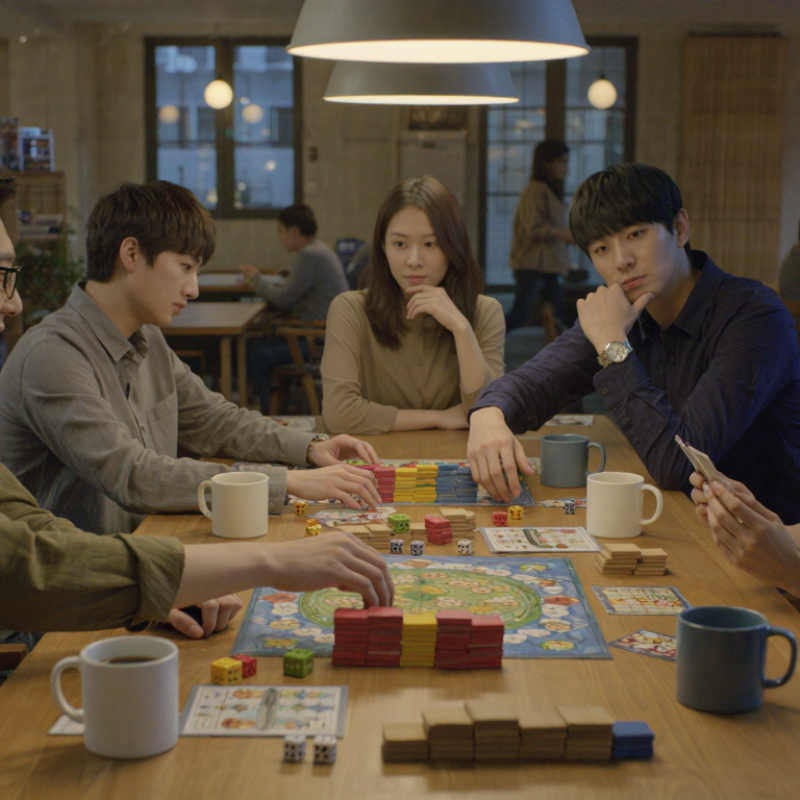
On a Friday evening, a café table may hold wooden tiles, score sheets, and half-empty coffee cups. Across the room, adults debate a trade, laugh at an unexpected betrayal, or quietly calculate their next move. This scene helps explain why Board Games For Adults have moved beyond occasional family entertainment. They offer structured social time in a world filled with notifications, deadlines, and hurried conversations. Players can meet face to face, learn a detailed system, and share a memorable experience without relying on a screen. Sometimes, the simplest interaction feels surprisingly valuable.

Modern board games also appeal to different interests and abilities. Strategy titles reward planning, negotiation games test communication, and cooperative games encourage shared problem-solving. Designers increasingly consider accessibility, balanced rules, and varied player preferences. Game cafés, reviewers, and hobby communities provide practical guidance, while psychologists and researchers continue examining how play may support connection and mental engagement. The evidence is promising, but not perfect. A difficult game can create frustration, exclude newcomers, or turn friendly competition into pressure. That weakness matters. Popularity does not automatically mean every game suits every group.

The deeper appeal may come from controlled complexity. A board creates boundaries, yet players still make meaningful choices within them. Dice introduce uncertainty. Conversation creates the real story. One session may end in laughter; another may reveal poor design or unequal experience. Understanding this balance makes the subject more interesting. Board Games For Adults are popular not simply because they entertain, but because they make people participate, negotiate, remember, and occasionally question how they play together.
Why Are Board Games For Adults So Popular?

Defining Adult Board Games: From Casual Pastime to Specialized Hobby

Adult board games are no longer defined only by difficult rules or serious themes. They now describe a flexible hobby, ranging from a 30-minute evening game to a four-hour strategy session. Adults may play for conversation, competition, storytelling, or quiet concentration. That range matters. A casual player needs quick setup and clear choices. A dedicated hobbyist may value expansion systems, detailed components, and long-term skill development. The boundary remains imperfect, because many games serve both groups.

The market reflects this wider appeal. Grand View Research estimated the global board games market at about USD 13.1 billion in 2023, with projected growth of 7.8% annually from 2024 to 2030. This figure covers all age groups, not adults alone. Still, it signals stronger demand for organized, replayable leisure. In my experience, adult players often return because each session creates a different social rhythm. One night feels tactical. Another feels surprisingly personal. Yet complexity can become a barrier, and more rules do not always create more fun.

Tips: Start with a game that teaches in ten minutes. Check player count, average playtime, and table space before buying. Choose a theme your group genuinely enjoys. Do not confuse expensive components with better design. A simple game can reveal weak communication, impatient players, or unclear expectations. That is useful feedback, even when the evening goes badly.

Market Evidence: Grand View Research Valued the Industry at $13.06 Billion in 2022

Adult board games are gaining attention because they offer social contact without requiring a screen. A game can turn a kitchen table into a small negotiation room, puzzle lab, or storytelling space. Grand View Research valued the global board games market at $13.06 billion in 2022. Its industry analysis also projects continued growth through 2030, supported by wider leisure spending and online retail access.

The numbers need careful reading. Market reports may combine traditional boards, strategy games, tabletop formats, and related accessories. Definitions differ. That weakness matters. Still, the direction is credible. Euromonitor International has reported stronger demand for home-based entertainment and shared leisure experiences in recent years. Adults often seek activities that feel social but remain structured. Rules reduce awkwardness. Competition adds energy.

In practical terms, adult players may spend an evening planning routes, trading resources, or reading subtle facial expressions. These details create memorable interaction. They also explain why many games now target deeper strategy and longer play sessions. Circana’s consumer research on leisure spending suggests that experiences can remain attractive when they create repeatable social value. Yet popularity is not universal. Some games take too long, explain poorly, or reward experienced players unfairly. I have seen a promising evening lose momentum during a forty-minute rule explanation. That is a useful warning for publishers and retailers. Market growth alone does not prove lasting satisfaction.

Social Connection: How Tabletop Play Supports Adult Relationships and Belonging

Why Are Board Games For Adults So Popular?

Tabletop games give adults a reason to meet without forcing constant conversation. Around a kitchen table, people share snacks, stories, laughter, and small frustrations. These moments can strengthen relationships through repeated, low-pressure contact. Social psychology research links shared activities with trust, cooperation, and a stronger sense of belonging. A game also creates natural conversation breaks. Silence feels less awkward when everyone is considering a move. I used to think winning created the strongest memories. Often, the funniest mistakes matter more.

Tips: Choose a game that matches the group’s energy and experience. Explain the rules with a short example, not a long speech. Invite quieter players to make decisions without putting them on display. Keep phones away when possible, but avoid turning attention into a strict rule. A relaxed table usually welcomes more people. Try cooperative play when competition feels too intense. Leave room for disagreement, because different strategies can reveal personality and build understanding.

Adult friendships often suffer from busy schedules, distance, and emotional fatigue. A regular game night can offer dependable social structure without demanding deep disclosure. It may help new colleagues feel included, or give old friends a fresh shared story. Still, tabletop play is not a cure for loneliness. Some groups become exclusive, and complicated rules can discourage newcomers. The best gatherings notice these limits. They make space for questions, changing preferences, and imperfect participation. Belonging grows when people feel heard, not merely invited.

Strategic Design: Why Choice, Competition, and Replayability Sustain Engagement

Adult board games thrive because every turn creates a visible decision. Choose a safe route, block an opponent, or gamble for a larger reward. These choices make players feel responsible for the outcome. Luck may interrupt. That tension keeps attention without requiring a screen. Competitive design also creates social stakes: a raised eyebrow, a silent pause, or a sudden alliance. Grand View Research estimated the global board game market at roughly $12 billion in 2023. That scale suggests more than a passing hobby.

Replayability is the stronger engine. Variable goals, modular boards, hidden information, and changing roles produce different stories. Players return because the second session exposes mistakes from the first. Circana’s 2024 U.S. toy industry report identified games and puzzles as a resilient category. However, market growth does not prove every design deserves repeated play. Some games confuse complexity with depth. After several sessions, weak choices become obvious, and novelty disappears. Designers need humility, testing, and honest player feedback.

Tips: Test the core decision with three different groups. Track replay interest, not only first-session excitement. Ask which choice felt meaningful. Short rules help, but meaningful consequences matter more. Add variation carefully; excessive randomness can erase skill. Keep a designer’s log. Reconsider everything.

Why Are Board Games For Adults So Popular? — Strategic Design: Why Choice, Competition, and Replayability Sustain Engagement

Evidence-based design dimensions that help explain sustained adult engagement with strategic tabletop games.
Design Dimension Observable Data or Indicator Engagement Effect Research or Evidence Basis
Meaningful Choice Players regularly choose between at least two strategically relevant actions, such as gaining resources, improving position, or blocking an opponent. Creates autonomy and gives players a sense that their decisions, rather than luck alone, influence the result. Self-determination research identifies autonomy as a core psychological need that supports intrinsic motivation.
Strategic Trade-Offs A strong decision often improves one objective while reducing another, for example speed versus efficiency or short-term points versus long-term growth. Trade-offs make decisions memorable and encourage discussion, analysis, and post-game reflection. Game-design literature commonly treats constrained choice and resource tension as foundations of strategic depth.
Competition Players can directly or indirectly affect one another through contested resources, timing pressure, positional advantages, or changing market conditions. Competition adds urgency, creates social comparison, and gives otherwise abstract decisions immediate consequences. Motivation research links competence feedback and social interaction with stronger participation and enjoyment.
Visible Progress Progress is represented through clear changes in points, resources, territory, personal engines, objectives, or completed actions. Visible progress provides feedback and helps adults connect each decision with a developing plan. Feedback and attainable challenges are central elements of flow-based explanations of focused engagement.
Replayability Replay value increases when setup, objectives, available actions, player roles, or resource conditions vary between sessions. Variable conditions prevent players from following one fixed solution and motivate experimentation across multiple sessions. Strategic game-design research emphasizes variability and emergent outcomes as major sources of repeat play.
Skill-Luck Balance Random events introduce uncertainty, while player decisions determine how effectively that uncertainty is managed. Moderate uncertainty keeps outcomes suspenseful without making strategic planning feel irrelevant. Game studies distinguish productive uncertainty from randomness that removes meaningful player agency.
Social Interaction Players exchange information, negotiate, cooperate, compete, interpret intentions, or respond to visible table behavior. The social layer adds emotional variety and makes each session different even when the formal rules remain unchanged. Research on play and motivation consistently identifies relatedness and interaction as important contributors to enjoyment.
Learning Curve Rules can be learned initially, while advanced tactics emerge through repeated play and comparison of different approaches. A gradual learning curve gives adults an achievable entry point and a reason to continue improving. Skill development and increasingly difficult challenges are established predictors of sustained engagement in motivational theory.
Post-Game Discussion Players can explain turning points, compare strategies, identify mistakes, and debate alternative decisions after the game ends. Reflection extends engagement beyond play time and encourages players to return with a revised strategy. Reflective learning models show that reviewing decisions helps convert experience into improved future performance.
Adult Relevance Themes and systems may involve planning, negotiation, economics, logistics, leadership, risk management, or ethical trade-offs. Adults often value games that provide both entertainment and intellectually meaningful conversation. Studies of modern tabletop play describe strategy, social participation, and thematic involvement as recurring reasons for adult engagement.
Interpretation: Adult board-game popularity is supported by the combination of autonomy, competition, social interaction, visible progress, and repeated opportunities to improve. No single mechanic guarantees engagement; sustained interest usually comes from how these dimensions reinforce one another.
Selected evidence: Deci and Ryan, “The ‘What’ and ‘Why’ of Goal Pursuits” (2000); Csikszentmihalyi, “Flow” (1990); Woods, “Eurogames: The Design, Culture and Play of Modern European Board Games” (2012); Salen and Zimmerman, “Rules of Play” (2004).

Cultural Expansion: How Crowdfunding and Cafés Have Mainstreamed Tabletop Gaming

Why Are Board Games For Adults So Popular?

Crowdfunding has changed how tabletop games reach adult players. Designers can test unusual ideas before mass production. Backers also become early reviewers, suggesting clearer rules or better components. This creates a direct relationship between creators and audiences. At local game nights, I often see adults discussing prototypes with surprising seriousness. A small table can hold maps, tokens, notebooks, and strong opinions. The process feels collaborative, not purely commercial.

Cafés have made this hobby easier to approach. Visitors can borrow a game, learn from a host, and play without buying immediately. Many cafés also provide quiet tables, warm drinks, and flexible evening events. These details reduce the fear of entering an unfamiliar community. Adults who dislike competitive pressure can choose cooperative puzzles or story-based games. The atmosphere matters as much as the rules.

It is not always welcoming.

Some games remain expensive, complicated, or difficult to explain. Crowdfunding can also reward attractive presentation over lasting play quality. I have watched people admire beautifully designed boxes, then abandon them after one confusing session. Better teaching, transparent reviews, and accessible café events could improve this problem. Even so, crowdfunding and cafés have moved tabletop gaming beyond private homes. They have made it more visible, social, and culturally acceptable for adults with different interests.

FAQS

What are adult board games?

They are tabletop games designed for adult interests, habits, and social settings. Sessions may last 30 minutes or four hours. Complexity is not required.

Why do adults enjoy board games?

They create screen-free social time with structure. Players may negotiate, plan routes, trade resources, or tell stories around one table. Sometimes, the conversation matters more than winning.

Are adult board games always difficult?

No. Some teach in ten minutes and finish quickly. Others include detailed rules, expansions, and long-term strategy. More rules do not always create more enjoyment.

How can beginners choose a suitable game?

Check the player count, playtime, and available table space. Choose a theme your group genuinely likes. A compact game may fit better beside a kitchen lamp.

What makes a board game social?

Players must communicate, make decisions, and respond to others. A quiet puzzle creates focused cooperation. A competitive game adds tension and sometimes awkward silence.

Are expensive components a sign of better design?

Not necessarily. Attractive pieces can improve handling, but they cannot repair unclear rules. A simple game may offer stronger choices and better replay value.

How do cafés help adults try board games?

Cafés provide games, tables, drinks, and sometimes teaching support. Visitors can test a game before buying it. The setting may feel welcoming, though not every café is accessible.

Has crowdfunding improved tabletop gaming?

It lets designers test unusual ideas and receive early feedback. Backers may suggest clearer rules or stronger components. Presentation can still overshadow actual play quality.

What problems can adult board games create?

Long explanations can drain the room before play begins. Some games favor experienced players unfairly. I still misjudge complexity sometimes. That failure is useful feedback.

Conclusion

Board Games For Adults have evolved from occasional family entertainment into a diverse and specialized hobby. Their popularity reflects both strong market growth and changing ideas about leisure, with the global industry valued at approximately $13.06 billion in 2022. Modern adult games offer more than simple amusement: they create opportunities for meaningful social interaction, helping friends, couples, and communities strengthen relationships while enjoying shared experiences.

Their lasting appeal also comes from thoughtful strategic design. Players are invited to make difficult choices, respond to competition, develop long-term plans, and discover new possibilities through repeated play. This combination of challenge, control, and variety keeps the experience engaging over time. In addition, crowdfunding has encouraged creative game development, while dedicated cafés and social venues have made tabletop gaming more visible and accessible. Together, these trends have transformed board gaming into a mainstream cultural activity that combines entertainment, connection, and intellectual stimulation.


Aria

Aria

Aria is a dedicated marketing professional with a deep passion for innovative strategies and a keen understanding of our company's product offerings. With a wealth of experience in the industry, Aria excels at crafting engaging content that highlights the unique features and benefits of our......